


How to Identify and Manage Aphids
Views: 11,943Share This:


Aphids are not often a common problem in the interior landscape, but they can occasionally appear. These tiny insects, also known as plant lice, may cause plant leaves to become deformed and sticky. In high numbers, aphids can stunt a plant’s growth. Knowing what to look for and how to respond early is key to keeping infestations under control.
Why Are Aphids So Destructive?
Both immature and adult aphids feed on plants by sucking plant juices, which distorts leaves. When infestations develop quickly, aphids can drain enough sap to leave a plant stunted or even dying. Like other insects that feed using piercing and sucking mouthparts, aphids secrete a sticky fluid called honeydew.
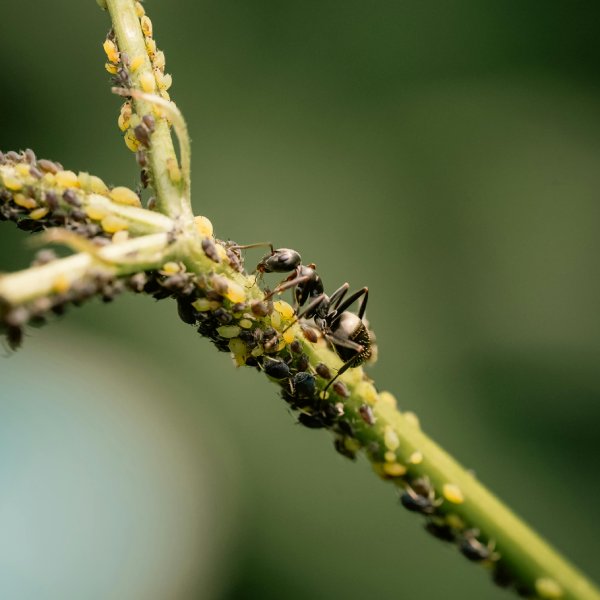
Honeydew can attract other insects, such as ants, which feed on the sweet material. Because aphids reproduce very quickly, honeydew can build up fast in the interiorscape, sticking to windows, planters, and other nearby surfaces. Over time, this buildup allows black mold, known as sooty mold, to grow on affected areas, creating an unsightly residue.
How to Identify Aphids
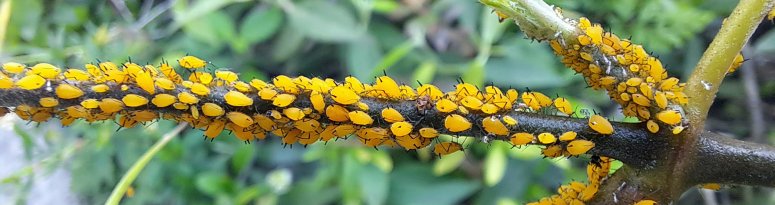
Aphids are tiny but easy to identify. While they can vary slightly in size, aphids are generally pear-shaped and have two tube-like structures at the tip of their abdomens that extend backward. Colors vary depending on the species and host plant.
Most aphids are wingless, but when a plant’s sap has been nearly depleted or populations become very high, some species will develop wings and search for new plants to infest. Aphids are most often found on new growth, though some species live and feed on plant roots.
The Life Cycle of an Aphid
Aphids can be a problem for indoor plants because of their sheer numbers. Female aphids can reproduce without mating, giving birth to live immature aphids and skipping the egg-laying stage. Outdoors, aphids lay eggs in the fall as temperatures drop, but in the warmer interiorscape environment, there is no need to overwinter as eggs.
Immature aphids resemble smaller versions of adults and begin feeding immediately, further stressing plants. Young aphids molt, or shed their skins, four times before reaching adulthood. Under optimal conditions, the common green peach aphid, Myzus persicae, can complete its life cycle in as little as 10–12 days.
Do You Have an Aphid Infestation?
Clear indicators include:
- Sticky honeydew
- White skin flakes (aphids shed their skins as they molt, which are sometimes confused with whiteflies)
- Ants
Plants struggling with an aphid infestation may show curled, yellowed, or mottled leaves; stunted growth of buds and branches; deformed buds; or even plant death. Ant activity is another key sign to watch for. If you see ants moving up and down a plant, it is often a strong indicator that a honeydew-producing insect is present.
It’s Time to Take Back Control
Aphids may have strength in numbers, but it is possible to mitigate the damage they cause and help prevent future infestations. Start by washing the plant, which can easily knock aphids off foliage. If necessary, prune heavily infested parts of the plant. When washing and pruning are not practical, biological control is an option. Beneficial insects, such as lacewing larvae, provide excellent control in the interior landscape. They feed not only on aphids, but also on other soft-bodied insects.
Spray options, including insecticidal soaps and horticultural oils, are also available. Take care not to overspray, as these products may create slippery floors or damage nearby surfaces. Chemical insecticides, such as Safari (dinotefuran) and Flagship (thiamethoxam), can be applied as a drench and are very effective. With drenching, overspray is not a concern. Another spray option is Endeavor (pymetrozine), a foliar-applied insecticide that paralyzes aphid mouthparts and prevents feeding. It is compatible with many biological control agents.
Pest control labels vary by state, and the pesticide user is responsible for consulting the label and following all applicable laws. Always read the label before application to ensure the product is legal for use on your site, in your state, and on the specified plant material.
Preventing Aphid Infestations
To help prevent aphids, keep a close eye on your plants and avoid overwatering or over-fertilizing. Aphids thrive in environments with high nitrogen. It is also important to inspect all new incoming plants before introducing them into an interiorscape. While aphids can be a challenging pest to control, staying vigilant and using appropriate management strategies can help stop infestations before they take hold.
Battling other common indoor plant pests? Check out my Professional’s Field Guide to Plant Pest Control for information on spider mites, whiteflies, thrips, fungus gnats, mealybugs, and scale insects.
Views: 11,943Share:


Suzanne Wainwright-Evans is an Ornamental Entomologist specializing in integrated pest management. Suzanne has been involved in the Green Industry for more than 18 years with a primary focus on biological control and using pesticides properly. She is a graduate of the University of Florida with degrees in both Entomology and Environmental Horticulture. She has worked throughout the United States and internationally consulting to greenhouses, nurseries, landscapers and interiorscape companies.

You May Also Like
One response to “How to Identify and Manage Aphids”
Leave a Reply
You must be logged in to post a comment.


Suzanne, we have found that most aphid infestations occur in residential interiorscapes where the homeowner decides to overwinter their summer tropicals, especially Hibiscus, in the house near their permanent indoor plants. As you pointed out, it only takes one female aphid, and then look out!