


HDPE Plastic vs. Fiberglass for Outdoor Commercial Planters: A Durability Comparison
Views: 34Share This:


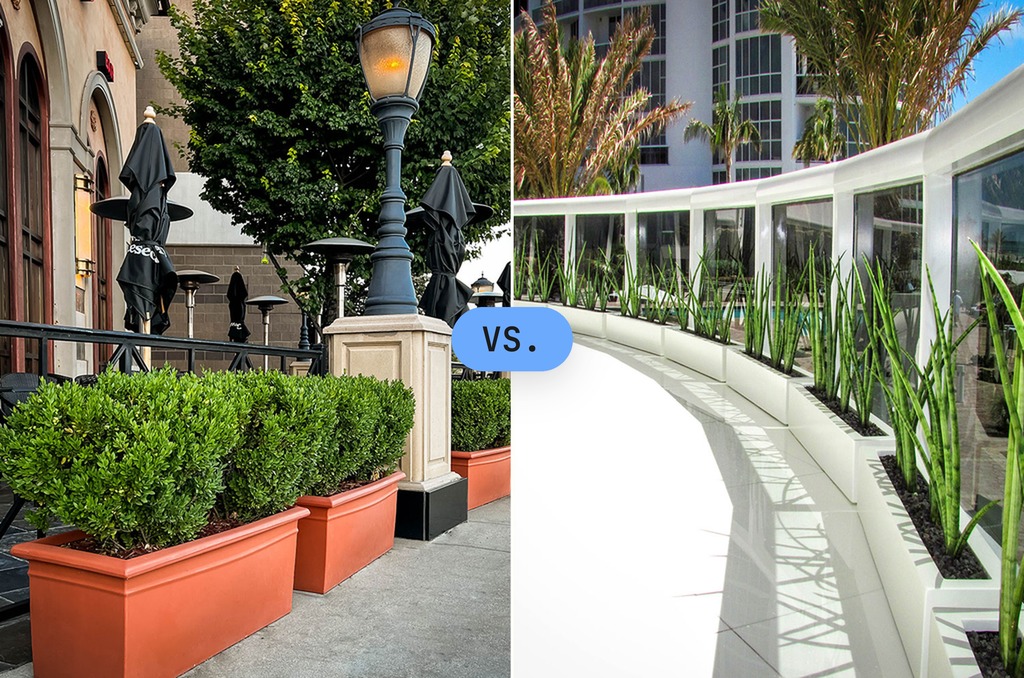
When specifying commercial planters for an outdoor project, material is one of the most important considerations for our interiorscape customers. The planters they choose need to be durable enough to weather both the elements and general wear and tear. Two common outdoor planter materials chosen for resilience are fiberglass and high-density polyethylene (HDPE) — both are suitable for commercial use, but the options differ when it comes to price point, finish options, weight, and stability.
This guide offers a deep dive into the attributes of HDPE and fiberglass planters, so you can find the right fit for your next plantscaping project.
Fiberglass Planters
Fiberglass containers offer architectural durability with finish flexibility. Made from glass fibers embedded in a resin matrix, these containers are strong, rigid, and lightweight. Finish options include a variety of colors and textures, from high-gloss solids to faux stone.
While more expensive than their plastic counterparts, fiberglass planters are built to hold their shape and finish for years to come, even in heavy-use spaces.
Popular Fiberglass Container Options
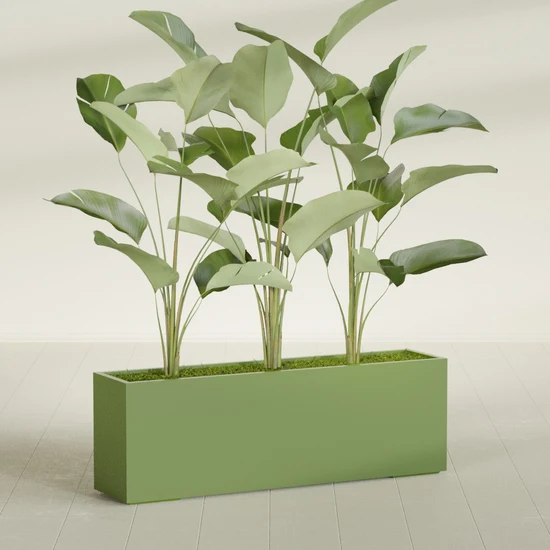
The Tolga by Jay Scotts, made of high-density, commercial-grade fiberglass, comes in five sizes. All containers are hand-finished to order with automotive-grade paint rated for 1,000 hours of UV exposure. Choose from 21 standard colors across matte, gloss, satin, and metallic finishes. To match brand standards, custom color matching is available via RAL K7, Pantone, Sherwin-Williams, and Benjamin Moore codes.
For a natural look, our team can also apply ProTone textured finishes by hand to mimic granite or Corten steel. Options include StoneLight Greystone, StoneLight Pearlstone, StoneLight Sunstone, and Weathered Steel in Rust.
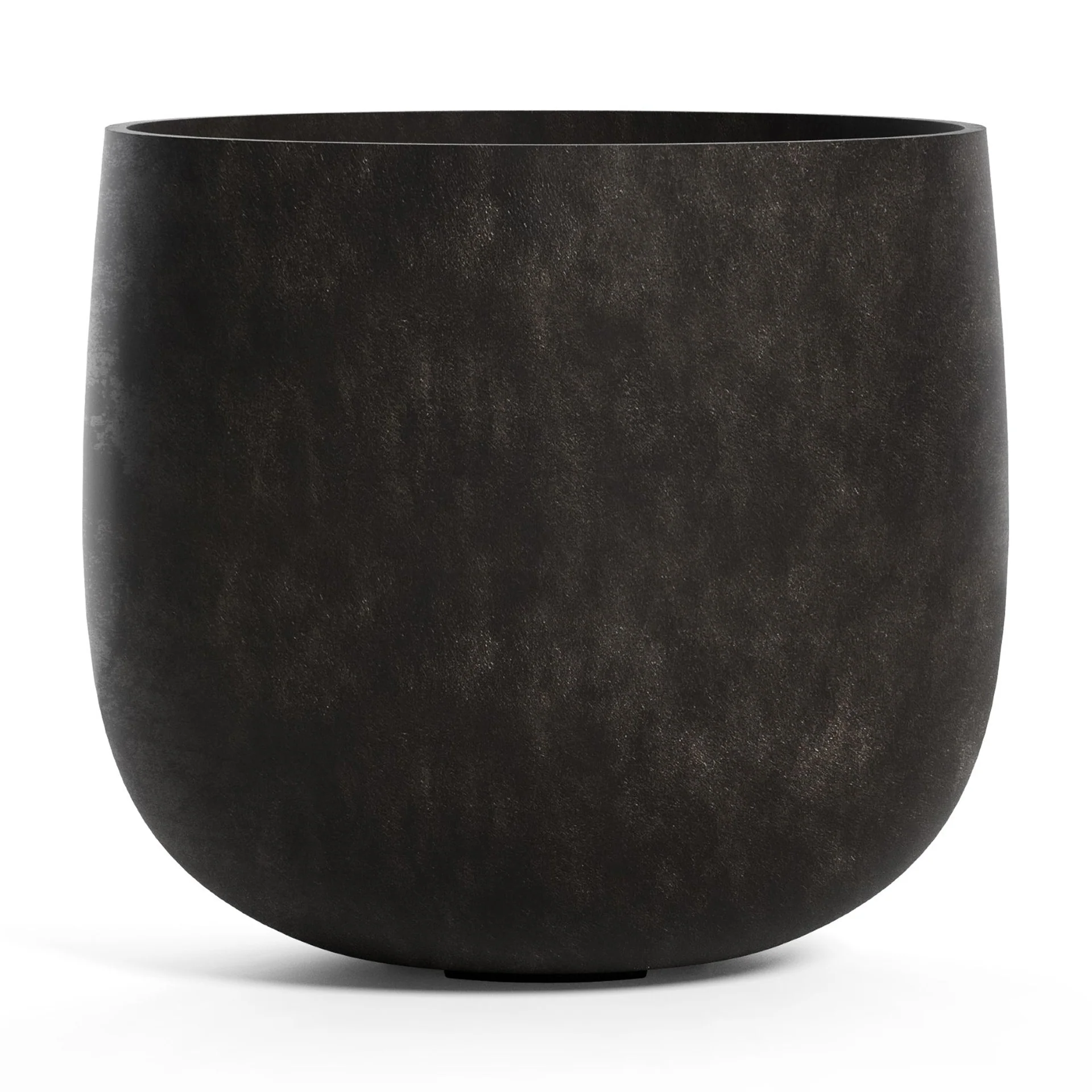
The Mondo collection from COSAPOTS is hand-finished using a specialized composite material called Cohesa, which is a blend of premium fiberglass and resin. The result is a matte, mineral-driven finish with the substance of natural stone and the lightweight durability of fiberglass.
This container comes in six stone finishes and 11 sizes, ranging from tabletop to extra large.
HDPE Planters
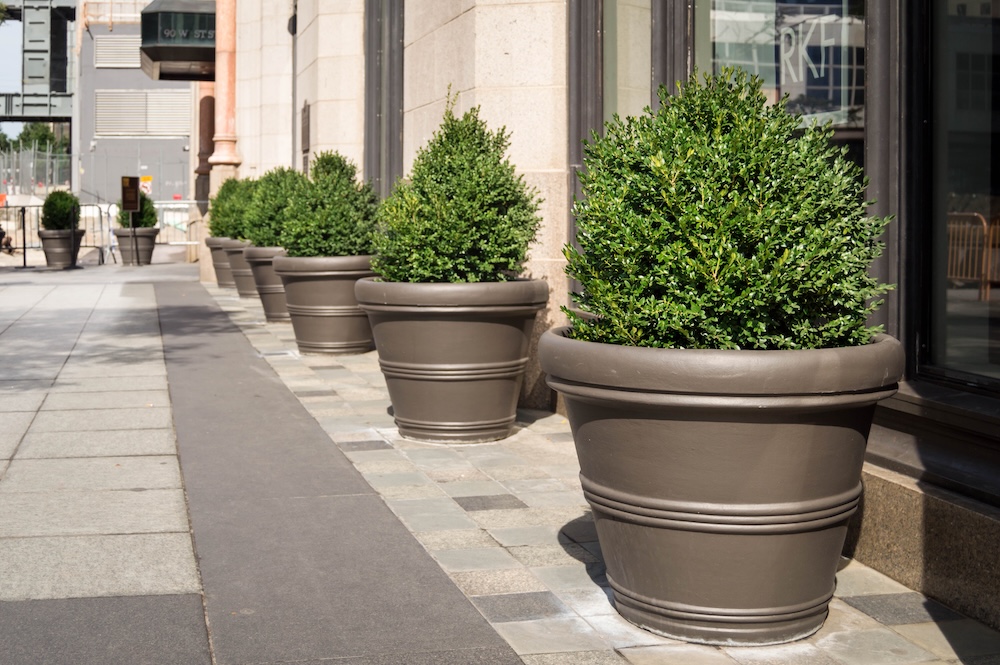
High-density plastic planters offer budget-friendly practicality for light commercial use. These containers are typically rotationally molded into seamless, one-piece forms that are tough, flexible, and weather resistant.
While incredibly lightweight and easy to clean, plastic planters aren’t as impact-resistant as fiberglass.
Popular HDPE Container Options
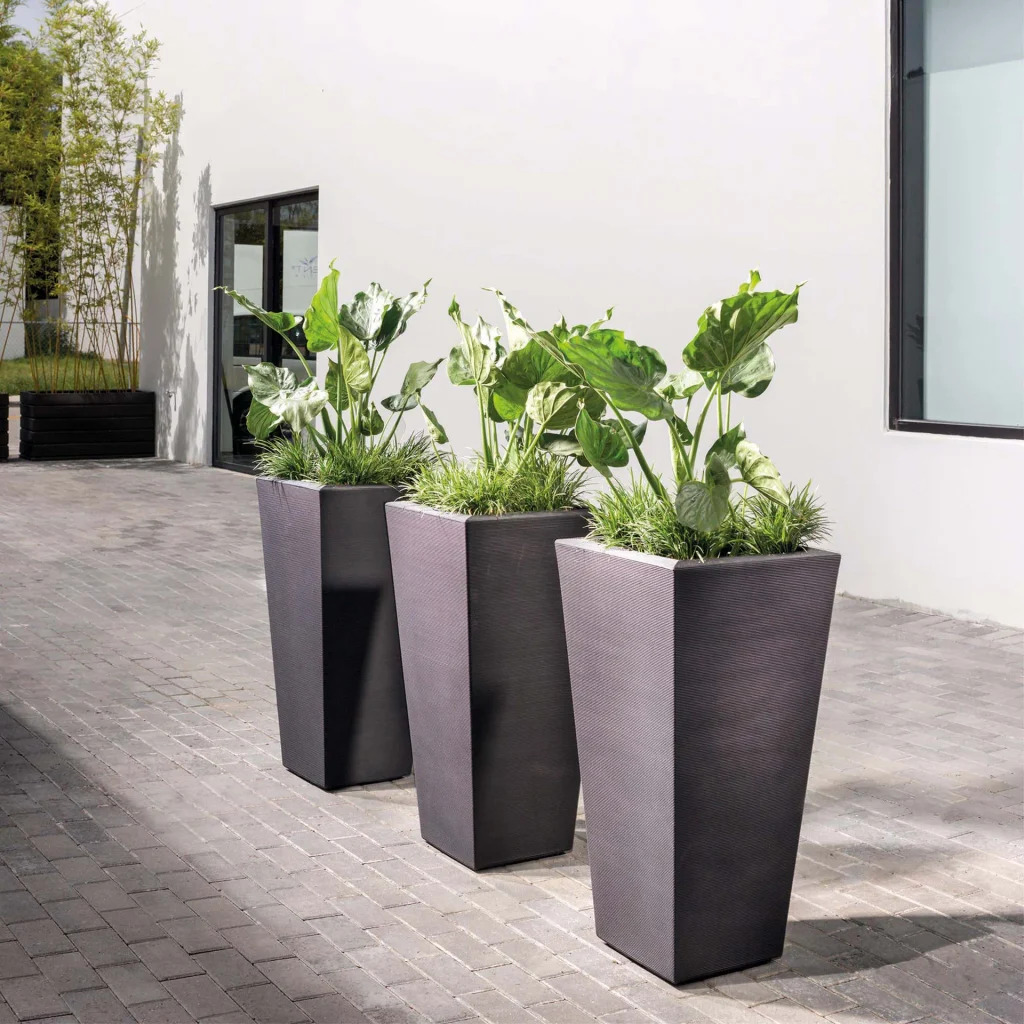
Crescent Garden offers a range of polymer planters in different sizes and shapes, including the Bowery, a column container available in four sizes and four finishes.
Crescent Garden planters are manufactured using a commercial-grade resin to meet the aesthetic expectations of landscape architects and designers while offering durability suitable for all-season lightweight commercial installations.
The MegaPots Cylinder planter is a decorative option that offers functionality on a budget. With a smooth surface that’s easy to clean and a lightweight footprint, this decorative planter with a traditional appeal makes installation and maintenance a breeze.
The extra large planter, available in seven finishes and sizes, is constructed to withstand extreme weather conditions.
HDPE Plastic vs. Fiberglass: A Side-by-Side Comparison
Both HDPE and fiberglass planters are lightweight, weather resistant, and built for outdoor commercial use. The right choice comes down to project budget, aesthetic needs, and how much traffic the space sees.
| Factor | Fiberglass Planters | HDPE Planters |
|---|---|---|
| Weight | Lightweight; strong thin walls keep large sizes manageable | Very lightweight; easy to move and install |
| Impact Resistance | Rigid and resists denting | Flexes rather than cracks, but less impact-resistant overall |
| UV Stability | Strong when finished with high-quality materials; automotive-grade paints can be rated for 1,000 hours of UV exposure | Good when UV inhibitors are incorporated in the manufacturing process; colors may gradually fade and can’t be refinished |
| Finish Options | Extensive: matte, gloss, satin, metallic, and stone-like finishes | More limited: a set range of molded-in colors and finishes |
| Price Point | Premium | Budget-friendly |
| Best Use Cases | Hotels, corporate campuses, rooftops, retail, and projects with brand color standards | Light commercial use, budget-conscious projects, and installs where planters are moved often |
The Bottom Line
The choice between fiberglass and HDPE comes down to priority. For design-driven spaces that demand custom finishes and long-term performance, fiberglass is worth the investment. For light commercial installs where budget and easy handling matter most, HDPE gets the job done.
Some clients use a mix, ordering fiberglass for high-traffic areas and HDPE for supporting spaces or seasonal displays. HDPE is also a popular choice for indoor planters.
Whatever your project calls for, the NewPro team looks forward to helping you find the perfect fit. Explore our inventory of wholesale outdoor planters, or connect with our team for custom orders or any questions.
Views: 34Share:

Stephanie Figy is a content specialist at NewPro Containers, where she writes case studies and blog content to inform and inspire interiorscapers and plantscapers. She brings more than a decade of experience in writing for the design and garden sectors, with a background spanning newsrooms, in-house marketing teams, and architecture firms. Stephanie earned a Journalism and Public Relations degree from the University of Indianapolis and has received multiple writing awards from professional journalism organizations and the Zweig Group.

You May Also Like

Leave a Reply
You must be logged in to post a comment.

