


How to Identify and Manage Whiteflies

Views: 15,931Share This:


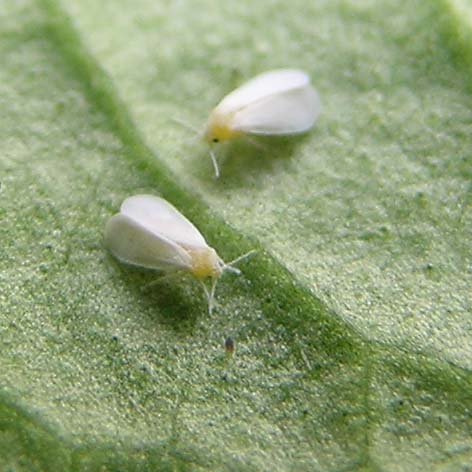
While whiteflies were once considered a less common issue in interior landscapes, newer invasive species have made them a growing concern in the U.S. Whiteflies are easy to recognize because of their small white wings, although they are not true flies. These insects damage plants by sucking sap, producing honeydew, and leaving behind waxy filaments. They are also a visual nuisance in professional interiorscapes, so it is important to identify and manage infestations early.
Why Are Whiteflies So Destructive?
Whiteflies use piercing mouthparts to feed on plant sap. As they feed, they excrete honeydew, which can lead to sooty mold when infestations become severe. Over time, this buildup diminishes plant health and affects the overall appearance of interior plants.
How to Identify Whiteflies
Adult whiteflies are soft-bodied insects with white wings and yellowish bodies. When disturbed, they often fly off the plant. Whitefly nymphs are oval and yellowish and may have white waxy filaments around their bodies that are often mistaken for legs.
The Life Cycle of a Whitefly
In warm temperatures, whiteflies develop quickly. Adult females lay between 200 and 400 eggs on the undersides of leaves in a circular or spiral pattern, depending on the species. About a week later, the eggs hatch into crawlers that disperse across the plant. These crawlers insert their straw-like mouthparts into the plant and begin feeding on plant juices. After feeding, they pupate before emerging as adult whiteflies. Development time from egg to adult varies by species, but the life cycle is completed in about four weeks on average.
Signs of a Whitefly Infestation
Common signs of a whitefly infestation include:
- White, gnat-like insects flying near plants
- Dropping or yellowing leaves
- Stunted or distorted growth
- Whiteflies clustered on the undersides of leaves
- Presence of sooty mold
How to Control Whiteflies on Indoor Plants
Before proceeding with treatment, it is important to confirm the presence of whiteflies on indoor plants. If whiteflies are present, removing heavily infested plants may be the best first step.
Biological control agents are available for some whitefly species, but many of these beneficial insects can fly, which may not be ideal for interior landscapes. In many cases, insecticidal soap or horticultural oil may be a more practical treatment option. For soaps and oils to be effective, the undersides of the leaves must be thoroughly sprayed.
Chemical insecticides such as Safari (dinotefuran) and Flagship (thiamethoxam) can also be used as drenches for interior plants and are highly effective. Another option is Endeavor (pymetrozine), a foliar-applied insecticide that paralyzes the mouthparts of whiteflies and prevents them from feeding.
Pest control labels vary by state, and pesticide users are responsible for consulting product labels and following all applicable regulations. Always read the label before applying a pesticide to ensure it is approved for your site, state, and plant material.
Preventing Whitefly Infestations
Seasonal plants like poinsettias are particularly susceptible to whiteflies and can serve as excellent host plants. If whiteflies are present on poinsettias, replacing the plants altogether may be the best option because treatment can become difficult once the plants are in color.
When dealing with adult whiteflies, yellow sticky cards can be an effective tool. Their bright yellow color attracts adult whiteflies, helping capture populations while also monitoring activity in the surrounding area. Early identification and consistent monitoring can go a long way toward preventing whitefly populations from spreading throughout interior landscapes.
Battling other common indoor plant pests? Check out my Professional’s Field Guide to Plant Pest Control for information on spider mites, thrips, fungus gnats, mealybugs, aphids, and scale insects.
Featured image by Fluffymuppet via https://www.flickr.com/photos/fluffymuppet/4904738679/
Views: 15,931Share:


Suzanne Wainwright-Evans is an Ornamental Entomologist specializing in integrated pest management. Suzanne has been involved in the Green Industry for more than 18 years with a primary focus on biological control and using pesticides properly. She is a graduate of the University of Florida with degrees in both Entomology and Environmental Horticulture. She has worked throughout the United States and internationally consulting to greenhouses, nurseries, landscapers and interiorscape companies.

You May Also Like
Leave a Reply
You must be logged in to post a comment.

