


How Interiorscape Designers Find Inspiration

Views: 9,647Share This:


Inspiration plays a big role in interiorscape design—but where does it come from?
When I started my business in 1988, I already had three years of experience working for an interiorscape company in Houston, Texas. On my own, I wanted to shake things up. I was constantly on the lookout for innovative designs, spending hours and money at newsstands buying subscriptions to magazines like Better Homes and Gardens, Architectural Digest, Fine Gardening, and Southern Living. I can still remember searching on my ancient desktop computer, typing in phrases like tall+plant+striped+footcandles—anything that might spark a new interiorscape design idea. Back then, finding inspiration took patience and a bit of persistence. My, my, how times have changed.
Finding Interiorscape Design Inspiration Online
Behold the 21st-century “search engine” and platforms like Houzz, Pinterest, Facebook, and Instagram. Searches are lightning-fast, delivering a dizzying, sometimes distracting barrage of visuals on anything you need or want to know about plants and design. We dissect and embellish, adding our own creative touches, but sometimes we simply replicate what we see because it’s an effective visual. For many of our clients, that aesthetic is essential.
Digital platforms can be powerful tools, but they work best when used as a starting point, not the final answer. The key is to filter what you see and adapt it to your client’s space, lighting conditions, and overall design goals rather than copying it outright.
Using Nature to Inspire Interiorscape Design
For me, nature has always been a powerful source of creativity. Since our work revolves around plants, natural elements, and a variety of textures, we’re not just responsible for something living—we’ve turned it into an art form. When I was commissioned to create three large moss wall panels for an office lobby, my inspiration came from an area not far from where they would be installed.
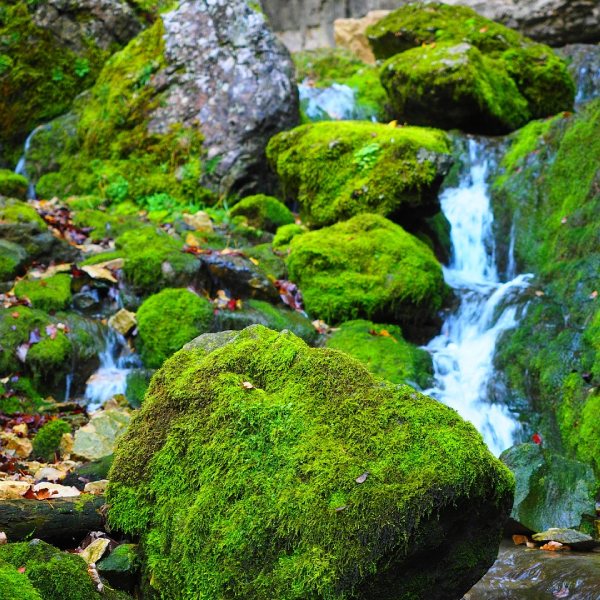
My city has some amazing greenbelt trails with large limestone rock formations oozing water from internal aquifers. Small pools lead to crevices covered with live moss, lichen, and maidenhair fern, spreading in beautiful patterns. During my visits to these areas, I studied the colors, the smells, and how the light or breeze changed the textures. This connection helped me form the foundation for this particular interiorscape project. It was a very rewarding experience for both the client and me.
Spending time in these environments—whether on a nature trail, in a botanical garden, or simply sitting on a bench or a blanket in a park—can help you start to notice how elements like color, texture, and light work together in a natural setting. Natural environments often provide layered, organic compositions that are difficult to replicate digitally, and spending time in them is helpful for creating interiorscape designs that feel more natural and intentional within a space.
The following passage from Riverwalking: Reflections on Moving Water by Kathleen Dean Moore speaks volumes:
“I wish to speak a word for the art of poking around. Although the art can be practiced in libraries and antique stores and peoples’ psyches, the kind of poking around I am interested in advocating must be done outdoors. It is a matter of going into the land to pay close attention, to pry at things with the toe of a boot, to turn over rocks at the edge of a stream and lift boards to look for snakes or the nests of silky deer mice, to kneel close to search out the tiny bones mixed with fur in an animal’s scat. People who poke around have seeds in their socks and rocks in their pockets. They measure things with the span of their hands. They look into the sun when they see a shadow pass across a field. They spit in rivers to make fish rise.”
Drawing Inspiration From the Details
Even with constant access to ideas, it’s easy to overlook what’s right in front of you. Some of the most valuable inspiration comes from slowing down and paying closer attention—whether that’s in an art gallery, flipping through naturalist books, or simply noticing patterns, textures, and movement in everyday environments.
Keep Looking, Keep Noticing, Keep Creating
The best interiorscape designers don’t rely on a single source of inspiration—they stay curious, observant, and open to ideas from both digital and natural environments. By combining these influences, designs feel more intentional and better suited to the spaces they’re created for. So go poke around. You never know what might spark your next great idea.
Views: 9,647Share:

Robbin Voight is a 45 year veteran of the interior plantscape and horticulture industry. Her new venture, www.rootedrightplants.com, is a consulting and garden service based in Johnson City, Texas. You can reach her at [email protected] or visit her social media profiles on Facebook and Instagram with the handle @rootedrightplantstx.

You May Also Like



2 responses to “How Interiorscape Designers Find Inspiration”
Leave a Reply
You must be logged in to post a comment.


I love your comments, Robbin. Especially the quote from Kathleen Moore, and the question about untapped potential within our own companies. I hope some folks will be encouraged to make the effort to try tapping that potential.
Thank you, Marlie. I hope so too. With all the details and “busyness” of our work, taking some moments in our day that aren’t scheduled, can free up wonder and possibly reveal that potential.