

Zamioculcas zamiifolia: The Foolproof Plant
Views: 14,367Share This:


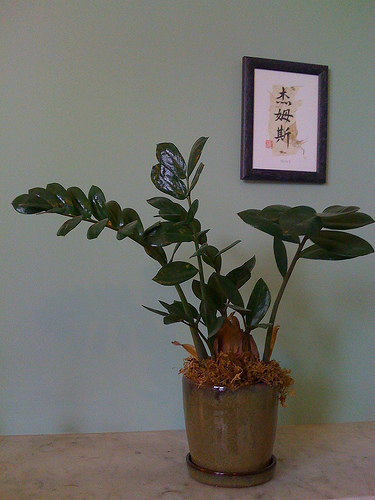 Everyone longs for the houseplant that refuses to die. For the forgetful that never water or the basement dweller that has no access to natural sunlight, the Zamioculcas zamiifolia is the perfect fit. It is also a natural fit for use in interior plantscapes. The Zamioculcas zamiifolia requires very little light and care to maintain attractive, shiny green foliage.
The Zamioculcas zamiifolia’s common name is the Zanzibar Gem, but it is also commonly referred to as the “ZZ plant” or “eternity plant.” According to Wikipedia, the ZZ plant is native to Eastern Africa, ranging north to Kenya and south to South Africa. It has been cultivated for commercial use as an ornamental plant relatively recently, while it entered the markets around 1996.
Watering
Zamioculcas zamiifolia is a unique plant in which this species is the only one found in the genus. It is adapted to arid climates and is very capable of surviving drought. The plant has a large potato-like rhizome that stores water, so in times of distress, the plant can use this reserve. Typically, the plant is an evergreen, but in times of severe stress, it can lose its leaves. If this happens, the leaves will grow back once the plant receives sufficient amounts of water.
Foliage
The ZZ plant is known and used particularly for its foliage; however, it does flower. The plant produces small yellow flowers on a spadix, which is a fleshy stem usually surrounded by a spathe, which is a colorful, modified leaf. More striking examples of spadix flowers include calla lilies and anthurium. The ZZ plant’s flowers are closer to the base of the plant and not very noticeable. Indoor plants will rarely produce a flower.
The ZZ Plant thrives best in indirect light with daytime temperatures between 75 and 90 degrees Fahrenheit. However, it can tolerate very low light levels as well. It is an ideal plant for interior office spaces, bathrooms, or basements. The plant will also thrive if it is watered weekly, allowing the potting media to dry thoroughly between waterings. It will also survive with very little appearance of ill effects if it is not watered for up to a month. Beyond that, it is likely to survive, but is not likely to remain an attractive plant.
The Only Way to Kill a ZZ Plant
The only way to kill a ZZ plant is to overwater. If the potting medium remains soggy or if water is constantly added to the soil, the rhizome, which is so important to the health of the plant, will succumb to root rot. There are no other pests or diseases that are likely to afflict the ZZ plant. Therefore, it is important to use a container with drainage holes and a potting medium that encourages water to flow through quickly. A cactus or succulent potting mix can be found in garden stores and nurseries, or sand and perlite can be added to conventional potting mixes. Either option will work well for a ZZ plant
The ZZ Plant is a slow-growing plant that can reach up to three feet high. Paired with a large container, the ZZ plant is an ideal floor plant, but take care because, according to Guide to Houseplants, the ZZ plant is very toxic to plants and animals. Do not use it in places where children and pets will have easy access to the plant.
The ZZ plant will satisfy any grower, from beginner to professional. Its bright green leaves are sure to provide a little of the outdoors to even the dimmest, most forgotten indoor spaces. Do you have a perfect place for a ZZ plant? What other plants do you depend on for no-fail results?
Views: 14,367Share:


You May Also Like

Leave a Reply
You must be logged in to post a comment.

