


Training Plant Technicians: A Week-by-Week Guide
Views: 12,281Share This:


You may not believe this, but somewhere out there right now, plant technicians are watering plants and don’t know a thing about what they’re doing. Do you think it’s because they’re foolish, lazy, or simply don’t care? No, it’s because they haven’t received proper training.
Whether you’re just starting as a ‘scaper and have hired your first technician or you’ve been in the business forever and have crews scattered around the countryside, if you don’t have the time to invest in training, you shouldn’t be in the business. And I don’t mean sending someone out with a new tech a couple of times to make sure they know where the accounts are located and where to find the water. I mean comprehensive, detailed training that covers everything from the basics of plant care to the nuances of customer service. Properly training your interiorscape plant technicians helps maintain healthy plants, keep clients satisfied, and protect the accounts your business depends on.
Weeks One and Two: Understanding the Basics
When I first started in this business at John Mini Indoor Gardens, a new hire spent two weeks in the greenhouse learning plant names, aesthetics, and the basics of installation. This is an excellent idea and a great way to start. It’s even better if some of those first two weeks are dedicated to training sessions, plant care videos, short courses from industry educators, and the Interior Plantscape Reference and Study Manual by Fred Proscod. These are available for a range of costs, while others are free online, including The Ficus Wrangler YouTube channel.
I realize that not everyone has a large enough company to indulge in things like greenhouses and extended periods of video watching. However, if you’re training an inexperienced plant technician, it will pay great dividends down the road to spend at least an hour or two each day during those first couple of weeks familiarizing them with the industry and their job. The following basics should be covered before your new tech ever hits the field:
- Names of plants and what they should look like
- General plant maintenance
- Warning signs of potential plant issues
- Tools and equipment
- Moisture testing
- Cleaning and grooming
- Record keeping
- Fertilization
- Pest and pathogen control
- Safety regulations and best practices
- Customer service
- Company policies
Week Three: Learning to Water Properly
After the initial two weeks, your new tech is fully trained and ready to go out and take care of your clients and their plants, right? Of course not! Training is just getting started.
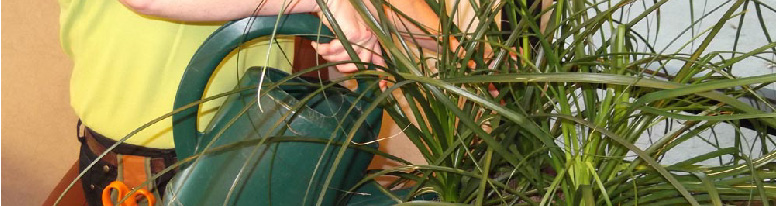
First, the tech should visit accounts with the trainer, practice the basics from the previous two weeks, and become familiar with the specifics of each account. For the first few days, they can practice carrying water without spilling, navigating the watering machine without obstructing people, and cleaning and trimming plants neatly. They should also make notes on each account and listen as the trainer explains how to assess a plant’s watering needs and determine how much water to apply. This is also the time to observe how an experienced technician completes the job efficiently while developing an eye for “beautiful plants” and a feel for soil moisture.
Right here, if I may, I’m going to climb up on my personal soapbox and declare that learning to feel the soil is the single most important skill for anyone who wants to care for plants, and that mastering proper watering techniques lies at the root (pun intended) of good plant care. It doesn’t matter what kind of plants or watering setups are in place. Whether it’s drip irrigation, self-watering planters, or good old watering cans, if you don’t stick your fingers in the soil frequently and get the watering part right, there will be problems.
The trainer should go into plenty of detail about watering. Techs need to understand how light affects water use, how to pour water without spilling or splashing it off the leaves, how to thoroughly irrigate the root mass, and how to keep records that show how different plants use water. Teaching these skills directly, rather than letting a new tech figure them out through trial and error, will make your operation more efficient and profitable in the long run.
One simple exercise can help a new hire understand different soil moisture levels and the terms used to describe them. Start with a small handful of your usual potting mix, about 2 tablespoons, and make sure it is completely dry. You can microwave it for a few minutes if needed. Put the mix into a small container and pinch some between your fingers. Feel it and remember the scratchy texture. This is “completely dry.” Next, add water 1/4 teaspoon at a time, mixing thoroughly and allowing it to soak in for a few minutes between additions. Pinch the soil after each addition and observe how the texture changes from almost dry to damp, to fully saturated, and finally to mud.
Along with discussing water, experimenting with soil, grooming plants, and cleaning up the area, the trainer should also be on the lookout for pests and pathogens. If you haven’t already done so, this is a good time to provide guides to the pests and diseases technicians are most likely to encounter. Resources such as Professional’s Field Guide to Plant Pest Control by Suzanne Wainwright-Evans may be useful.
Remember, even though concepts and examples were introduced in the initial training materials, they need to be repeated often. An old advertising rule says you need to repeat a message three times before it sticks. With a new technician being confronted with so much unfamiliar information, many lessons will need to be repeated even more than that. Persevere, even when they tell you they remember.
Weeks Four and Five: Transitioning to Independent Work
After a week of close observation, the new tech is ready to do some watering, explaining aloud to the watchful trainer what they’re doing and why. While the trainee handles the watering, the trainer can begin trimming, inspecting for pests, and cleaning, all while explaining what they’re doing and why. Ideally, the entire fourth week should be dedicated to proper watering practices. At the very least, two or three days focused solely on watering are essential. This is also a good time to explain any accounts that require special care or consideration, such as atriums, outdoor plants, irrigation systems, ladder work, green walls, or unusual plants.
By the fifth week, the new plant technician can start taking on cleaning, trimming, and watering. The trainer should stay close by to keep an eye on things, pointing out forgotten plant rotations, missed mealybugs, brown leaves, water drops on the floor, time management issues, and so on. The need to do all these things within the time allotted to the account is of paramount importance and has been the rock against which many interested and talented new techs have foundered.
As the new tech takes over more of the account work and gains confidence, it’s time to introduce tasks that don’t happen daily but are nevertheless part of regular maintenance. These include fertilizing, pruning, soil leaching, repotting, reworking, and more. This is also a good time to introduce a guide to the signs of chemical imbalance. It’s difficult to find a visual guide for foliage plants, but Ohio State University’s plant pathology fact sheets are a valuable resource. The American Phytopathological Society’s information on nutrient disorders may also be useful for your new hire to read and reference.
Once the trainer and new tech have completed the routine together at least once, they are ready to work alone. However, large or especially difficult accounts may benefit from having the trainer accompany them for a couple more visits.
So now five weeks have passed, and you have fully trained your tech, right? Not exactly.
Week Six: Graduation
After the new tech has gone through the route alone once or twice (not long enough to seriously harm anything), the trainer should accompany them to their accounts once more. This gives the trainer a chance to make sure they’ve mastered the basics, reinforce weak points, and answer questions. Ideally, the trainer has also been checking in on the accounts shortly after the tech completes their work to identify any problems right away.
This is also an excellent time to administer a written test. Written tests have a way of legitimizing a job and reinforcing the idea that this is a real industry and craft with clearly defined knowledge and specific goals. Knowing there will be an exam down the road can also help keep the learning more focused. The test should cover the names and requirements of the plants the new employee will work with, the importance of soil moisture and how to regulate it, proper grooming routines, signs and management of pests and diseases, nutrient disorders, essentials of customer service, applicable regulations, familiarity with their routes, and any other subjects you find appropriate.
Once your new hire has passed their written test, they can officially graduate from newbie status to rookie. Finally, training is done, right? Again, not exactly.
Continuing Education for Interiorscape Plant Technicians
As the rookie progresses through the first six to eight weeks on the job, the trainer should continue to visit accounts periodically. Checking an account the day before service, when the plants may be at their lowest point, and again shortly after service is complete is a great way to evaluate their work. While checking these accounts is important, feedback is even more critical. The rookie needs to know that someone is paying attention to what they’re doing and is there to help, even when they don’t recognize that they need it.
Most people who start as interiorscape plant technicians have no inkling of the depth and complexity of the job. I know when I had six months under my belt, I genuinely thought I knew pretty much everything there was to know about plant care. Three or four years later, I found I was still learning. Ten years after that, I realized there’d always be something new to learn. And so there has been.
There’s so much to understand about plants, problems, customer service, and the whole world of horticulture that you never really come to the end of it. Just when you think you’ve got it all down, another curveball comes your way. There’s always a new challenge, a different pest to identify, or a plant reaction to understand. So keep those training wheels on a bit longer, continue learning, and give your techs the support and feedback they need along the way. Every healthy plant and satisfied client is a reflection of the work they do and the training behind it.
Views: 12,281Share:

Marlie Graves, known as The Ficus Wrangler, has been keeping plants beautiful, training techs and relating to clients at half a dozen companies for 30 years. She studied creative writing and psychology in college and went on to start an independent film company with her first husband. She decided to focus on plants full time after completing the NYBG Horticulture School interior landscaping course. Marlie is retired, operates "The Ficus Wrangler" YouTube channel, contributes regularly to several houseplant forums, and is working on a plantcare book based on professional methods.

You May Also Like



2 responses to “Training Plant Technicians: A Week-by-Week Guide”
Leave a Reply
You must be logged in to post a comment.


Marlie, great article! I agree with most of what you put out there, especially the “taking notes” part. My old Latin teacher in high school, Mr. Howe, had a saying: “Repetition is the soul of scholarship”. We learned that listening while writing notes and reading our own notes as we wrote them was a triple-whammy method for memory retention that worked like a charm.
I do have one question for you. I know you started at John Mini, which is a very large interiorscape company as our industry goes. So you probably had the luxury of backup staff when a tech left the company suddenly or with little advance notice for hiring/training a replacement. That’s always the nightmare scenario for a small firm like ours, where we’ve never had more than four techs working at any given time. What would you advise as a training regimen in an “emergency” situation such as that one?
Thanks Clem. I’ve worked for small companies too, and I know that sinking feeling you get when a call comes in first thing in the morning, “Hi guys, sorry, don’t think this business is for me, won’t be coming in anymore.” Of course, everyone ends up in a scramble, techs doubling up on work, the supervisor doing all service, even the owners getting out there. Actually, I do have an idea one might use as a training tool to prepare techs for these eventualities. After the tech has been at it around, say, three months, starting to feel pretty cocky, call them up one morning and say, “You need to finish your day’s route in half a day, I need you to do ********’s route this afternoon.” Don’t think of it as a lie, think of it as emergency training. If they pitch a fit, explain they’ll only need to do the vital stuff, and they really need to M-O-V-E!
Kind of a similar thing happened to me at JMIG. I got a call in the morning, telling me to finish my day’s work in 3 hours, then do another tech’s route in 3 hours, cause they were going out to Queens to get a route done there, so we could all get home before a snowstorm closed down the city. I didn’t think it could be done, but I did do it, and I felt pretty darn good about it, too. As we all know, sometimes if you’re a plant tech, you need to go “pedal to the metal” overdrive; it’s nice to know you can do it if you have to.