


The Circadian Rhythm in Plants May Improve Our Lives
Views: 6,520Share This:


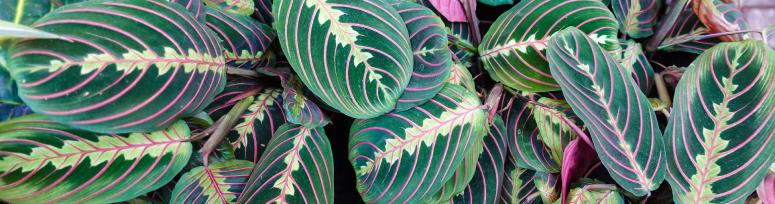
I’ve been in the horticulture industry for over two decades. As much time as I’ve spent observing and caring for foliage, I’ve never actually witnessed the circadian rhythm in plants and their foliage movement with the exception of the prayer plant. If you aren’t familiar with this unusual plant, in the evening, when you see the striped leaves start to curl in, you may think you did something awful to quickly kill it. When in fact, this is the prayer plant’s natural internal clock telling it that it’s time to fold. In the morning, it stretches out again for maximum photosynthesis.
After centuries of observation of similar foliage, scientists now believe the effects of the circadian rhythm in plants—a plant’s internal biological clock—may be a key to improving our lives. Like us, plants and the animal kingdom follow and coordinate their behaviors in a 24-hour cycle. Basically, plants and animals change their behavior as this internal biological clock mysteriously tracks the daily and seasonal cycles of Earth’s rotation.
What they have discovered is that the circadian rhythm in plants is fueled by a universal force they call the central oscillator. This oscillator/motor is made up of a complex network of genes that activate or deactivate activity. This, in turn, creates a feedback loop that accurately calibrates time. While all life shares the oscillator motor, not all share the same circadian rhythm.
In the interior plant business, we know all too well that immobile interior plants are more susceptible to disease. Landscapers have far fewer infestation issues because Mother Nature keeps it in check. The circadian rhythm in plants allows them to time their defenses against invading hosts, anticipate attacks, and plan for a defensive response. For instance, a plant’s biggest defense lies in its surface. Features such as tiny hairs and wax coatings help prevent pests from sticking onto a plant’s surface.
Makes sense why tough-skinned plants such as succulents have far fewer disease issues. They also have a stomata or cellular opening that is regulated by the clock, opens during the day, and then closes at night. This is an important process for photosynthesis and water exchange, but it also makes the plant more vulnerable to disease when open. Plants also have a defensive surveillance system that can detect pathogens and harmful intruders. When it alerts of invasion, the plant tissue reacts by closing its stomata, restricting access and making it much harder for pests to take over and disease to set in.
By using plants such as the Arabidopsis, studies involving the disruption of their circadian clock, biologists discovered that plants’ natural defense systems faltered and caused significant harm. They could clearly see the difference in health and size between an Arabidopsis in the wild, which was much larger and greener than the test plant.
What does this mean for humans? It seems our lives are more dictated by outside demands, such as getting to an early am conference meeting, than the circadian clock telling us it’s way too early to get out of bed. We ignore this universal clock, and that often leads to feelings of jetlag, stress, or depression. Some scientists believe a well-calibrated circadian clock is critical for growth and fitness, and ignoring one’s circadian clock causes diverse and far-reaching health issues—harmful diseases such as diabetes, obesity, cardiovascular disease, and some psychiatric disorders, like bipolar disorder. These findings only confirm my beliefs that being among nature helps our ailments.
Biologists and scientists are studying this universal circadian clock, hoping to unlock more mysteries that will help us develop natural cures for these ever-increasing human problems. In fact, in 2017, a Nobel prize went to groundbreaking work on the “elucidation of the molecular basis underlying circadian rhythms.” In the meantime, I think the more we surround our daily lives with plants, the better we feel.
Views: 6,520Share:


Sherry has been part of the interiorscape industry for over fifteen years, starting at an entry level job at North Florida's largest greenhouse and currently owning two horticulture companies. At UMaine, Sherry majored in English where she worked part-time writing scripts for a local college TV studio.

You May Also Like


Leave a Reply
You must be logged in to post a comment.

